
About John

This author has not yet filled in any details.
So far John has created 53 blog entries.

mCCR vs eCCR

2026-06-18T00:27:38+00:00

mCCR versus eCCR When you look into purchasing or diving a closed-circuit rebreather (CCR), you will quickly encounter two primary designs. These are the manual closed-circuit rebreather (mCCR) and the electronic closed-circuit rebreather (eCCR). Both types of rebreathers use electronics to monitor your breathing loop. The fundamental difference between them is how they add [...]

mCCR vs eCCR2026-06-18T00:27:38+00:00

Deco Placement

2026-06-17T23:50:21+00:00

Technical diving involves carrying extra cylinders like decos or stages. More cylinders do not equal more safer, and a common issue for technical divers, even today, is breathing an incorrect gas mixture and having hypoxia or hyperoxia. Deco cylinders are used on the ascent and contain higher oxygen concentrations to accelerate decompression speed. Stage [...]

Deco Placement2026-06-17T23:50:21+00:00

Gas Blending

2026-06-17T23:35:37+00:00

Gas Blending When you transition into technical diving, learning how to blend your own breathing gases is a valuable skill. When I became a tech diver, learning to blend was a standard requirement because team members had to prepare their own gases. Today, technical fill stations in technical destinations are common, but relying solely [...]

Gas Blending2026-06-17T23:35:37+00:00

Stages

2026-06-16T17:34:18+00:00

Stage Diving When divers get full cave certified and start exploring passages that were previously off-limits involving complex navigation, they eventually hit a wall. Not a literal wall of rock, but a strict limit on penetration. Even with increased experience, comfort, and large capacity cylinders, like HP133s, you can only go so far on [...]

Stages2026-06-16T17:34:18+00:00

Tank Factors

2026-06-05T01:41:48+00:00

Tank Factors In technical diving, executing the rule of thirds or planning gas management is simple when everyone on the team swims with the exact same cylinders. If both you and your buddy carry identical doubles and start with equal pressure, you will turn the dive at the exact same pressure. However, this [...]

Tank Factors2026-06-05T01:41:48+00:00

Helium Penalty

2026-06-05T01:29:24+00:00

Helium Penalty Technical divers use helium to reduce gas density and narcosis. The "Helium Penalty" is the theoretical idea that because helium is a smaller, faster molecule than nitrogen, it requires deeper stops and longer decompression times. Modern research suggests this is theoretically incorrect. The famous shearwater article described this inaccuracy and quickly [...]

Helium Penalty2026-06-05T01:29:24+00:00

Important Gear

2026-06-04T21:11:25+00:00

Important Gear Technical divers are usually meticulous - or, at least I hope they are. We should analyze and label every cylinder, research relevant topics, and reduce risk as much as is reasonable. Regulators should be taken care of and serviced routinely. The same goes for CCRs, lights, and exposure protection. The most important [...]

Important Gear2026-06-04T21:11:25+00:00

Trimix Financials

2026-04-26T18:33:36+00:00

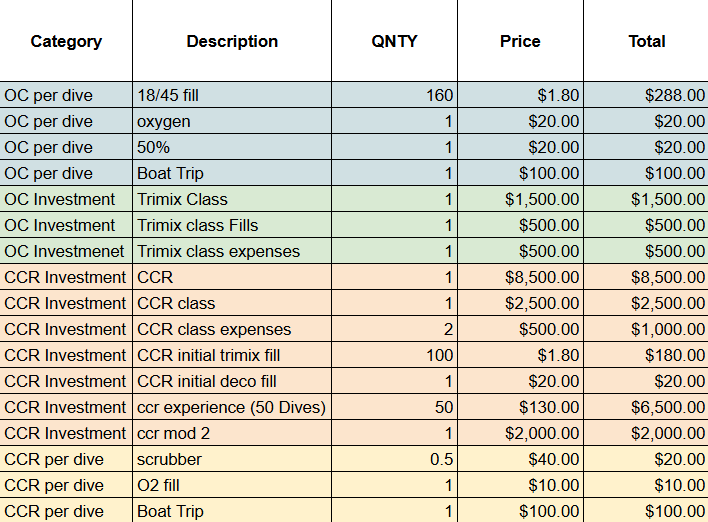
I don't want to do open circuit trimix, I'd rather get a CCR and save the money As the cost of trimix continues to rise, this conclusion continues to be more attractive. But - does the math check out? Probably not. Open circuit trimix still has a place in diving and is the correct [...]

Trimix Financials2026-04-26T18:33:36+00:00

Oxygen Toxicity

2026-04-24T23:39:57+00:00

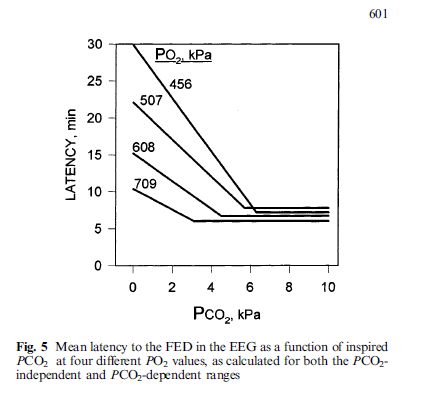
Oxygen Toxicity Most divers know the NOAA Central Nervous System (CNS) oxygen exposure chart and the CNS tracker on your computer — telling you how long you can stay at a given partial pressure of oxygen. It’s a useful tool, but like most tables, it only tells part of the story. Oxygen toxicity [...]

Oxygen Toxicity2026-04-24T23:39:57+00:00

CCR Skills

2026-04-23T10:55:49+00:00

CCR Skills This text is a supplement to your CCR training. We will review all of these procedures together, and all skills will be demoed by me. Reading about the skills beforehand is a great way to prepare for your class. CCR diving requires a lot of new concepts and procedures. Take notes and [...]

CCR Skills2026-04-23T10:55:49+00:00
Go to Top